Fintech’s new foundation: FDIC-insured dollars on crypto rails
The era of regulated digital assets has arrived. Uphold CEO Simon McLoughlin confirms federally-insured US dollars are moving onto crypto rails, ending the regulatory uncertainty of stablecoins and defining the new compliance and product mandate for global fintech leaders.
-
EVENT COVERAGE SPONSORED BY LIBERIS
- October 27, 2025
- 3 minutes
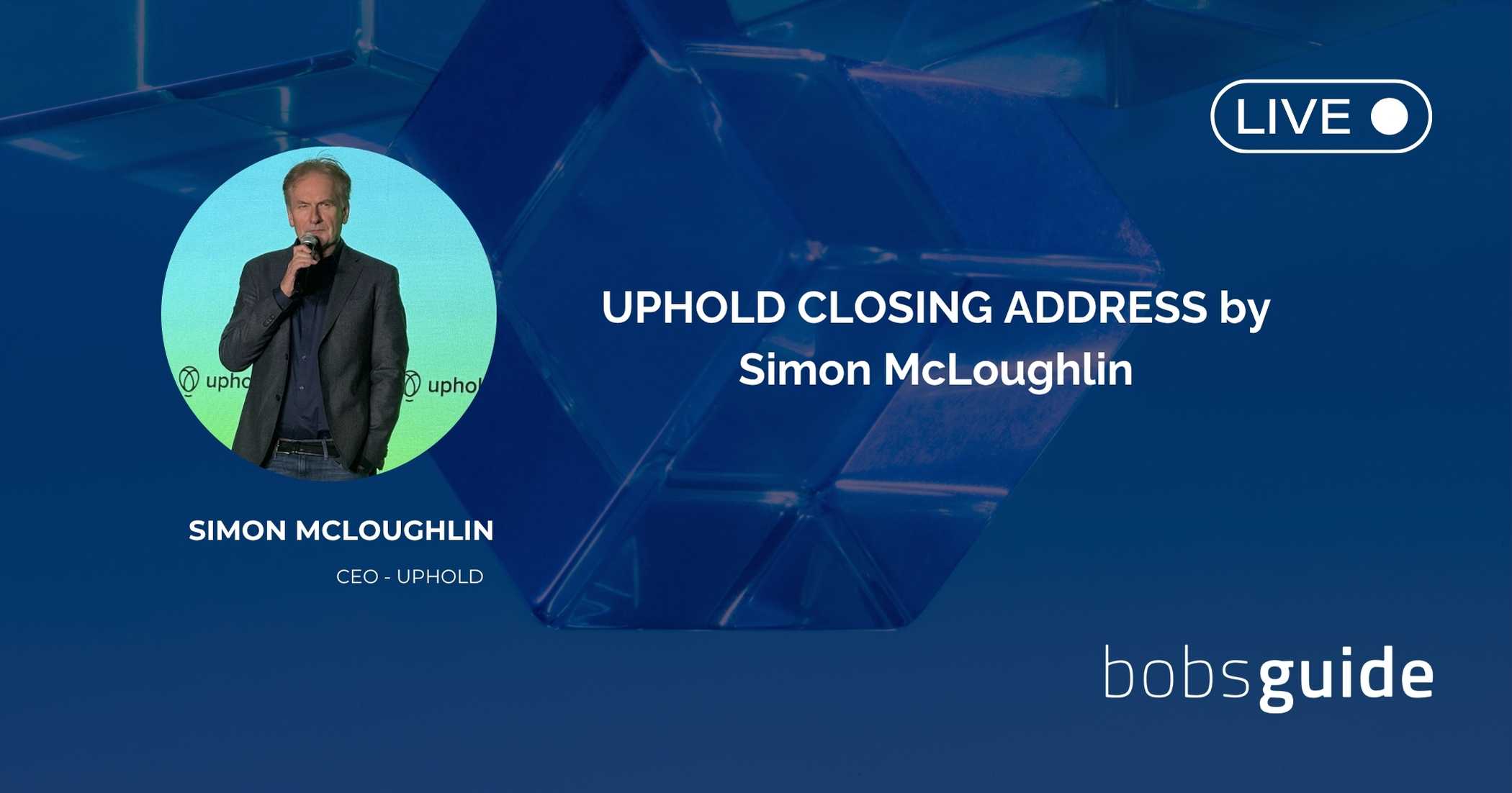

Uphold CEO Simon McLoughlin Signals the End of the Stablecoin Era with Federally-Insured Digital Deposits
The future of on-chain finance is not just faster; it is now fully regulated. In his closing address at the Money20/20 summit, Uphold CEO Simon McLoughlin delivered a powerful call to action for fintech leaders: innovation is accelerating “back on shore” to the US, backed by robust consumer protection and regulatory clarity.
The central announcement confirmed a landmark step in payments and treasury: the forthcoming launch of the first US Dollars issued by a federally chartered bank that will be globally accessible via Uphold’s infrastructure. This development is not merely a security upgrade; it represents a fundamental shift in how digital currency will be integrated into global financial products.
From Stablecoin Risk to Regulated Opportunity
For fintech founders, product managers, and compliance officers, this development is a critical differentiator. It replaces the counterparty risk of many digital assets with the fundamental trust of the US banking system, delivered at the speed and low cost of blockchain.
Why This is the Next Financial Infrastructure
The new model leverages tokenized deposits, which are on-chain representations of actual funds held in a regulated deposit account.
- Trust as a Service: The underlying US dollar funds are designed to be eligible for FDIC insurance (up to applicable limits) and protected by Regulation E (Reg E) against unauthorized transactions. This level of consumer protection is unmatched by standard stablecoins, immediately making this model more attractive for mass-market financial products and B2B services.
- Compliance by Design: The entire architecture is built around a federally chartered bank. This move eliminates years of regulatory uncertainty that has plagued the general crypto space, giving fintechs a clear, compliant path to integrate digital dollars into their offerings.
- Global Access, Zero Friction: McLoughlin noted that customers worldwide will be able to get a US dollar deposit account that moves on crypto rails. For payment and treasury fintechs, this means instant global reach without the slow, costly intermediation of legacy correspondent banking networks like SWIFT.
Strategic Mandates for Fintech Leaders
Fintech leadership must recognize that this shift from unregulated digital assets to regulated on-chain banking demands a strategic pivot, impacting product design, compliance, and growth strategy.
-
Prioritize Compliance-Driven Product Innovation:
- Action: Immediately begin evaluating how tokenized, regulated deposits can replace or augment current stablecoin and cross-border payment rails in your products. This move transforms a perceived security liability into a core competitive feature based on FDIC-level trust and consumer protection.
- Focus: Emphasize the regulatory clarity in all marketing and product descriptions, this is a key differentiator for attracting and retaining institutional and consumer capital.
-
Evaluate Time-to-Market for On-Chain Integration:
- Action: McLoughlin highlighted that Uphold’s infrastructure can help partners integrate on-chain capabilities in as little as 90 days. Fintechs should look to API-first platforms that offer this rapid integration to avoid multi-year, multi-million-dollar internal builds.
- Focus: The window for establishing market leadership in this newly regulated space is shrinking. Speed and technical efficiency are paramount.
-
Future-Proof Against Payments Fraud:
- Action: While blockchain offers security, the new global, real-time nature of these transactions requires elevated fraud prevention strategies. Invest in sophisticated transaction monitoring and advanced digital identity solutions that can keep pace with instant, 24/7 movements of funds.
- Focus: This convergence creates new touchpoints for fraud, especially around synthetic identity and account takeover, demanding proactive security from the product planning stage.
The message from Money20/20 is unambiguous: the next phase of fintech growth will be built on the foundation of regulated, compliant digital assets, opening up unparalleled opportunities for global product expansion and operational efficiency.