SMBs embrace digital wallets and 5G for contactless payments
New data from Verizon Business reveals a significant surge in SMB adoption of contactless payments and 5G, reshaping the fintech landscape and redefining customer engagement in retail, restaurant, and food & beverage sectors.
-
Nikita Alexander
- July 24, 2025
- 7 minutes
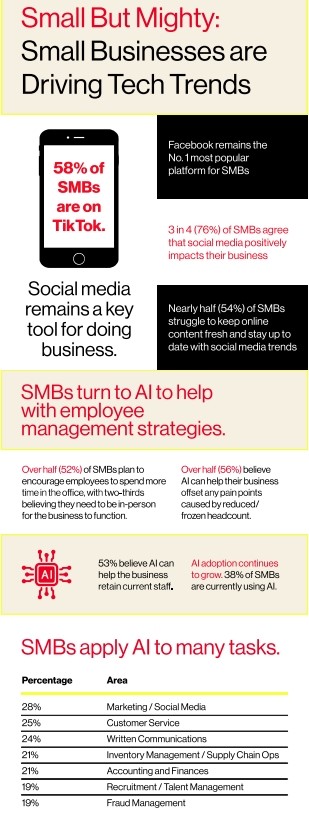
The financial technology sector is currently experiencing a profound transformation, driven by the rapid adoption of contactless payment methods and 5G technology, particularly within the small and midsize business (SMB) segment. Fresh insights from the Verizon Business 2025 State of Small Business Survey underscore a pivotal shift in how SMBs are embracing digital solutions not merely as a convenience, but as a strategic imperative to meet escalating customer expectations and streamline critical operational workflows. The comprehensive survey, which encompassed 600 SMBs across a diverse spectrum of industries, distinctly identifies retail, restaurant, and food & beverage businesses as the vanguards of this pervasive digital transformation.
This paradigm shift is not just about adopting new payment rails; it’s about a fundamental re-evaluation of how businesses interact with their customers, manage their finances, and leverage advanced technologies to foster resilience and growth in an increasingly digital-first global economy. For the fintech industry, these trends signal both immediate opportunities and long-term strategic considerations, ranging from payment processing and digital wallet integration to the burgeoning role of blockchain in securing these transactions.
The Ascendancy of Digital Wallets: Meeting Customers Where They Are
The survey meticulously highlights the commanding presence of digital wallets in the current payment landscape. SMBs are demonstrating a clear understanding that a diversified payment acceptance strategy, encompassing various digital wallet solutions, is paramount to customer satisfaction and competitive differentiation. This proactive approach reflects a deep awareness of evolving consumer preferences, where speed, security, and convenience are no longer merely desirable features but fundamental expectations.
The data reveals compelling market penetration:
- PayPal continues its undisputed leadership, being accepted by a remarkable 75% of the surveyed businesses. Its long-standing presence and established trust among consumers and businesses alike solidify its position as a foundational digital payment method.
- Google Wallet and Apple Wallet are neck and neck in popularity, each embraced by 52% of SMBs. This dual acceptance underscores the pervasive influence of mobile operating systems in shaping consumer payment habits, highlighting the importance of native integrations for a seamless user experience.
- Beyond these titans, a vibrant ecosystem of other digital payment options is thriving: Cash App is accepted by 49% of businesses, demonstrating its significant reach, particularly among younger demographics. Venmo, with 43% acceptance, reinforces the trend of peer-to-peer payment solutions migrating into commercial use cases. Zelle, at 34%, indicates the increasing role of bank-driven real-time payment networks, while Samsung Wallet, accepted by 27%, further diversifies the mobile payment landscape.
This widespread acceptance of digital wallets has profound implications for the fintech industry. It necessitates that payment processors, acquiring banks, and payment gateway providers continually enhance their platforms to support a broad spectrum of digital wallet integrations. Furthermore, for cybersecurity firms specializing in finance, the proliferation of digital wallets underscores the critical need for robust fraud detection mechanisms, secure tokenization, and multi-factor authentication protocols to protect sensitive financial data transmitted through these channels. The increasing use of digital wallets also opens avenues for innovation in loyalty programs, personalized offers, and data analytics, enabling SMBs to gain deeper insights into customer behavior.
5G: The Unseen Backbone of Contactless Commerce
While digital wallets represent the consumer-facing interface of contactless payments, 5G technology is rapidly emerging as the critical infrastructure underpinning these transactions.
The survey’s revelation that 40% of SMBs in the retail, restaurant, and food & beverage sectors now leverage 5G networks to facilitate contactless payments marks a substantial leap from just 24% in 2023. This accelerated adoption rate highlights a growing recognition of 5G’s transformative potential beyond just faster internet speeds.
The advantages of 5G in the context of contactless payments are multifaceted:
- Enhanced Speed and Low Latency: 5G’s superior speed significantly reduces transaction times, ensuring quick and seamless customer experiences at the point of sale. This is particularly crucial in high-volume environments like retail checkouts or busy restaurants, where every second saved contributes to greater efficiency and customer satisfaction. The low latency of 5G also improves the responsiveness of cloud-based POS systems and real-time inventory management.
- Increased Reliability and Stability: A robust 5G connection offers greater stability compared to traditional Wi-Fi or older cellular networks, minimizing transaction failures and connectivity issues. This reliability is paramount for businesses that depend heavily on continuous payment processing.
- Enhanced Security: While 5G networks themselves provide inherent security advantages through advanced encryption and network slicing capabilities, their integration with contactless payment systems requires a holistic cybersecurity approach. The faster data transfer allows for more sophisticated real-time fraud detection algorithms to be deployed, enhancing the overall security posture of transactions.
- Support for IoT and Edge Computing: The unique characteristics of 5G make it ideal for supporting the Internet of Things (IoT) devices that are increasingly integrated into modern retail and hospitality operations, from smart POS terminals to connected inventory sensors. This opens new possibilities for intelligent payment systems and highly efficient operational management, with data processing potentially happening at the network edge for even faster response times.
For the fintech community, the rise of 5G as a payment enabler presents both challenges and opportunities. Developing payment hardware and software that fully leverages 5G’s capabilities will be key. Furthermore, the cybersecurity implications of a more interconnected payment ecosystem, where devices communicate over 5G networks, demand proactive threat modeling and robust security protocols. This also aligns with the growing interest in blockchain technology for secure, transparent, and immutable transaction records, potentially enhancing the trust and verifiability of contactless payments over 5G networks.
The Broader FinTech Imperative: Secure, Flexible, and Future-Proof Solutions
The Verizon Business survey data unequivocally points to a strategic imperative for SMBs: to invest in payment solutions that are not only fast and secure but also inherently flexible and future-proof. This commitment is not born of a fleeting trend but from a fundamental recognition that adapting to evolving customer demands and maintaining a competitive edge in an increasingly digital landscape is non-negotiable.
For the fintech industry, this provides a clear roadmap. There is a burgeoning demand for comprehensive solutions that:
- Facilitate Omnichannel Payments: Businesses need platforms that seamlessly integrate various payment methods – digital wallets, traditional cards (both chip and tap), and potentially emerging blockchain-based payment solutions – across online, in-store, and mobile channels.
- Prioritize Cybersecurity: As digital transactions proliferate, the threat surface expands. Fintech providers must embed advanced cybersecurity measures, including encryption, tokenization, real-time fraud analytics, and compliance with data protection regulations (like GDPR in the UK or state-specific regulations in the US), directly into their core offerings. The increasing value placed on secure transactions also highlights the potential for distributed ledger technologies (DLT) like blockchain to provide enhanced security and transparency for payment settlement.
- Leverage Data Analytics: Beyond transaction processing, SMBs are increasingly seeking insights from their payment data to understand customer behavior, optimize pricing, manage inventory, and personalize marketing efforts. Fintech solutions that offer integrated analytics and reporting tools will be highly valued.
- Are Scalable and Adaptable: As businesses grow and technology evolves, payment solutions must be flexible enough to scale with demand and adapt to new innovations, such as the potential integration of central bank digital currencies (CBDCs) or more widespread use of stablecoins for payments in the future.
- Enhance Operational Efficiency: The drive to streamline operations, as mentioned in the survey, means fintech solutions must do more than just process payments. They should integrate with other business functions like accounting, inventory management, and customer relationship management (CRM) systems to provide a unified operational view. This could involve API-driven integrations or comprehensive platform solutions.
The rapid embrace of digital wallets and 5G by SMBs is not just a technological upgrade; it’s a fundamental shift in business strategy. These trends signify a dynamic market ripe with opportunities for innovation, partnership, and strategic development. As the pace of digital transformation continues to accelerate, staying attuned to the evolving needs of SMBs and leveraging cutting-edge technologies will be paramount for success in the competitive financial ecosystem.