Is quantum here or still far away?
Is quantum computing already transforming businesses, or is it still a distant future technology? At the Dublin Tech Summit, the panel session “Sh*t’s Gonna Get Weird: Going Quantum in Business” explored the revolutionary potential of quantum computing across various industries, including fintech.
Experts discussed how quantum technologies, from sensing and communications to computing, are set to disrupt traditional models and bring about unprecedented advancements.
-
Marina Mouka
- May 30, 2024
- 5 minutes
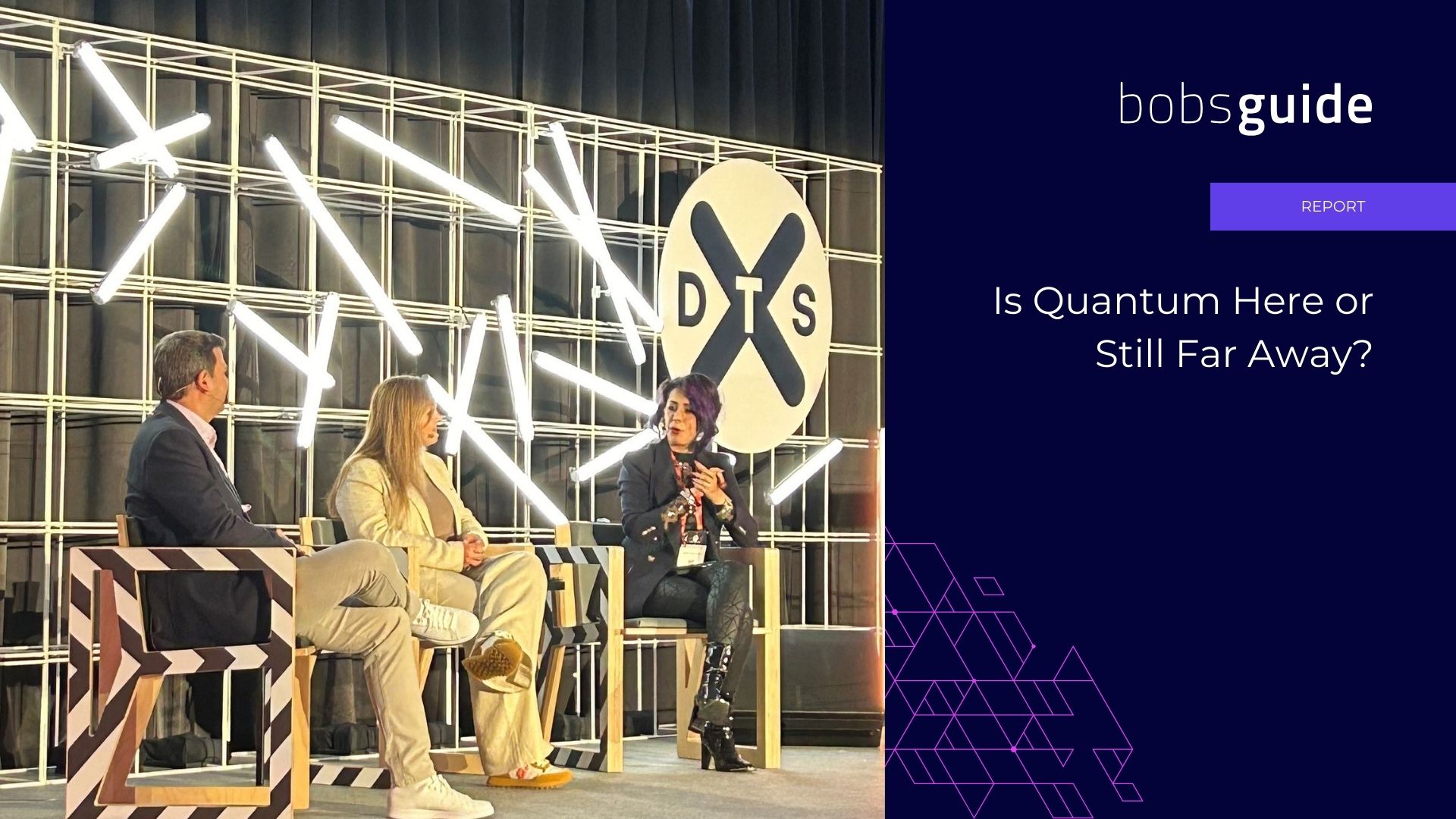
How will quantum computing revolutionise the business landscape? What should leaders know to navigate this transformative technology effectively? And, how much weirder are things going to get?
These pressing questions framed the discussion on the first day of the Dublin Tech Summit on May 29, where experts delved into the fascinating future of quantum computing in various industries. From healthcare and pharmaceuticals to finance, cybersecurity, and telecommunications, the potential applications of quantum technologies are vast and still being explored.
The panel included Dr. Manuel Proissl, Global IBM Quantum Industry Applications Lead and Senior Executive Advisor – AI & Quantum Solutions at IBM; Samira Nik, PhD, Programme Manager for Quantum Tech and Electronics at the European Innovation Council and SMEs Executive Agency (EISMEA); and Dr. Zina Jarrahi Cinker, Director General and Chief Creator at MATTER / PUZZLE X.
“Quantum computing isn’t just a distant dream; it’s fast becoming a business imperative,” declared Dr. Zina Jarrahi Cinker during the panel session titled “Sh*t’s Gonna Get Weird: Going Quantum in Business.”
Understanding quantum technologies
Dr. Zina Jarrahi Cinker set the scene, acknowledging the session’s unique title and the urgency of understanding the quantum landscape.
Samira Nik provided a comprehensive overview, explaining that quantum technologies span multiple areas: computing, sensing, communication, and software simulation. “We are pushing to bring quantum sensors into real environments because it will be very beneficial for many different application areas,” she noted.
Quantum sensing, for instance, promises advancements in medicine and space exploration by providing ultra-precise measurements. Quantum communication, on the other hand, offers ultra-secure data transmission, which could revolutionise how information is shared across the globe.
Applications in fintech
Quantum computing also holds significant potential for the fintech industry, particularly in finance and banking. Dr. Manuel Proissl highlighted that quantum algorithms could transform financial modeling, risk assessment, and portfolio optimisation.
“Quantum computing can process complex calculations at unprecedented speeds, offering deeper insights and more accurate predictions,” he explained. This capability could enhance fraud detection, streamline transaction processes, and improve security measures.
By harnessing the power of quantum computing, financial institutions could achieve greater efficiency, innovation, and competitive advantage.
Dr. Manuel Proissl also discussed the rapid advancements in quantum computing, noting significant breakthroughs in the past year. “Five years ago, we might have said quantum computing was fifty years away. Now, the timeline has dramatically shortened,” he said.
Proissl emphasised that the quality and control of qubits are crucial, not just their quantity. The industry is moving towards practical applications faster than previously anticipated.
Strategic importance for businesses
Addressing the relevance of quantum technologies for business leaders, Samira Nik stressed early investment and engagement. “If you wait for it to be fully functional, it will be too late. Now is the time to support these technologies to reach the next level,” she urged.
Nik highlighted Europe’s proactive approach, mentioning significant investments and initiatives aimed at fostering a robust quantum ecosystem, including the European Commission’s flagship programs and the European Innovation Council’s investments.
“We have amazing startups in Europe pushing the boundaries with different technologies,” she stated. Nik also highlighted efforts to match startups with private investors and facilitate public procurement.
Dr. Proissl added practical advice for businesses, encouraging them to identify specific use cases and experiment with quantum technologies. “Understand your business problems and see where quantum computing makes sense,” he advised, emphasising that businesses do not need to be quantum experts to start exploring potential applications.
Societal and cultural impacts
Dr. Jarrahi Cinker highlighted the broader societal implications of quantum technologies, focusing on education and inclusivity. She mentioned the United Nations’ initiative to declare 2025 the International Year of Quantum, which aims to promote equity and gender balance in the field.
“Encouraging girls at early ages to take part in this technology is crucial,” Nik added, stressing the need for cultural shifts to achieve gender equality in high-tech sectors.
Integration and collaboration
The discussion also touched on the integration of quantum technologies with existing systems. “Integrating various systems and ensuring they work together is crucial,” noted a panelist, recommending investments in data connectors and integration solutions to improve efficiency and save costs.
Collaboration among the C-Suite was another focal point. “Understanding the needs of CIOs and CTOs and viewing them as customers is essential,” emphasized Proissl. This collaboration is critical to finding and implementing the best technologies tailored to an organisation’s unique needs and goals.
Is now too late?
The panel concluded with a call to action for individuals and companies to engage with quantum technologies now. Both Proissl and Nik underscored the importance of proactive learning and investment to leverage the potential of quantum computing and ensure a competitive edge in the rapidly evolving tech landscape.
“Sh*t’s gonna get weird, so we need to be prepared for it,” Dr. Jarrahi Cinker encapsulated, urging stakeholders from various sectors to explore the possibilities that quantum technologies offer.


 Bobsguide is a