How Central Bank Moves and Energy Pressures Threaten Fintech Volatility
Rising energy prices and transatlantic central bank divergence are threatening fintech stability. Explore how financial institutions across the UK and US can hedge interest rate, FX, and credit risks.
-
Bobsguide
- September 18, 2026
- 4 minutes
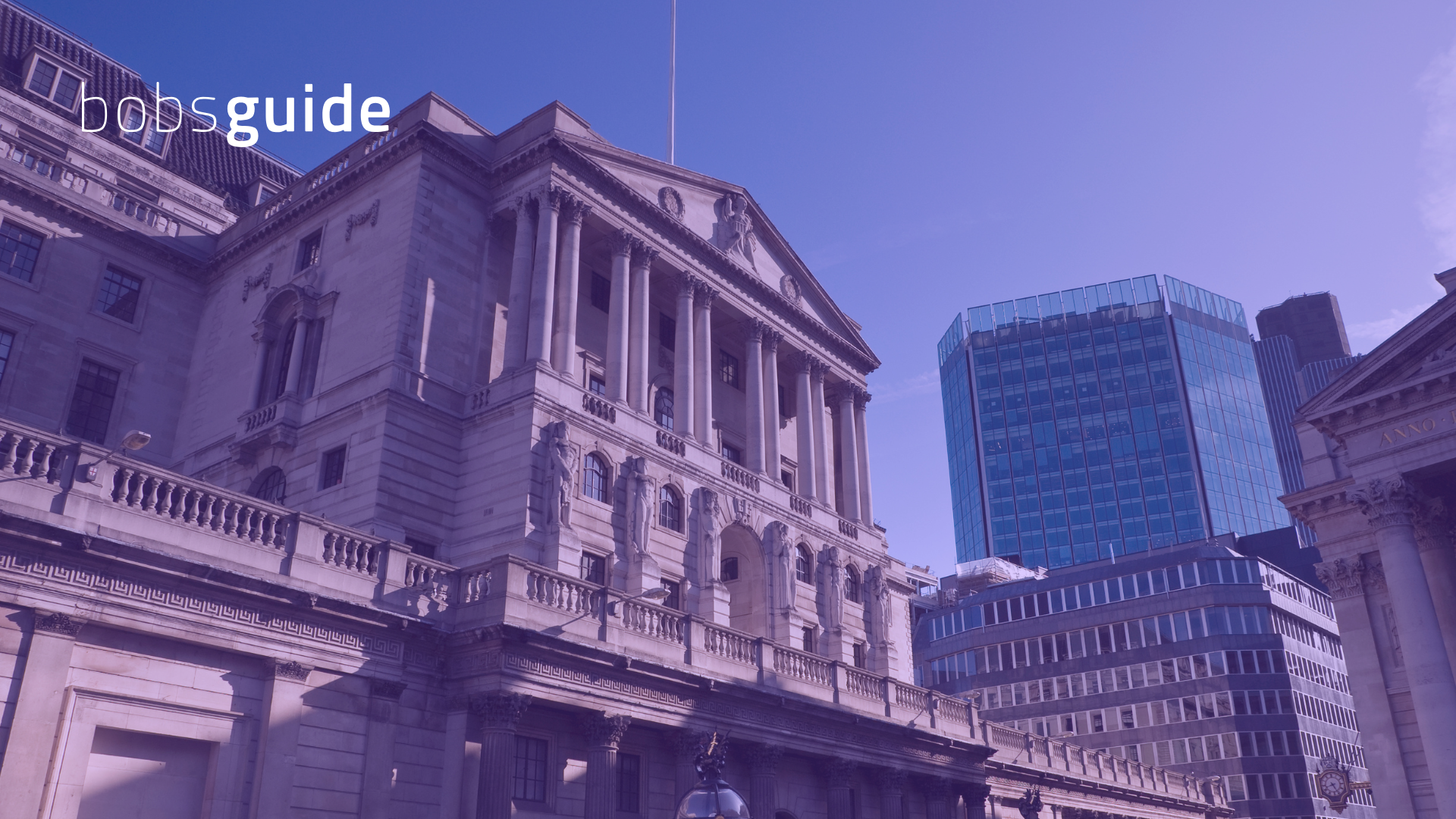
A wave of renewed hawkishness is rippling through major central banks, threatening to disrupt the macroeconomic backdrop for fintechs, digital banks, and capital market participants across the UK and the US.
Despite the Bank of England (BoE) keeping interest rates unchanged at its latest Monetary Policy Committee (MPC) meeting, market observers warn that the pause could be brief. Geopolitical friction in the Middle East has driven a resurgence in global energy prices, injecting supply-side shock risks directly into broader supply chains. Compounded by the US Federal Reserve resuming rate increases for the first time since July 2023, pressure is building across global debt and equity markets.
“While the Bank of England kept interest rates unchanged as expected at its meeting today, there is a growing risk of a rate hike before year end,” said Jonathan Ashworth, Chief Economist at ACCA and former HM Treasury Economist. “A renewed rise in energy prices amid developments in the Middle East is increasing pressure on global central banks to tighten policy, with the US Federal Reserve hiking interest rates yesterday for the first time since July 2023. With UK inflation already well above target and expected to rise towards 4% by early 2027, and amid an economy showing some resilience, pressure is likely to increase on the Monetary Policy Committee to act.”
Pre-Shift Policy Trajectory and Monetary Divergence
To understand the current tension, it is necessary to examine the monetary trajectory that brought transatlantic markets to this junction. Following the aggressive tightening cycles of 2022 and 2023 to combat post-pandemic inflation, central banks entered a cautious holding pattern, followed by modest rate adjustments as core inflation appeared to cool.
However, structural economic sticky points have prevented a full return to historical low-interest baselines. The Bank of England voted 6–3 to hold its benchmark rate at 3.75% at its September meeting, yet three dissenting MPC members pushed for an immediate 25-basis-point increase. This internal divergence comes as UK CPI inflation reached 3.1%, far above the BoE’s 2% target.
Across the Atlantic, the US Federal Reserve surprised market participants by ending its hold and raising the federal funds target range by 25 basis points to 3.75%–4.00%. Driven by US headline inflation holding at 3.4% and an energy price jump of over 16% year-over-year, the Fed’s action signals that central banks remain hyper-vigilant to second-round inflationary pressures.
Transatlantic Macro Headwinds
The macro narrative for financial institutions in the UK and US is shifting from rate cuts to rate defence:
- Federal Reserve Tightening: The Fed’s rate increase reflects persistent core price pressures in the US, strengthening the US Dollar and increasing international borrowing costs.
- Bank of England Hawkish Bias: The BoE maintained its benchmark rate, but UK CPI rising and projected to approach 4% by early 2027 leaves little room for dovish pivot strategies.
- Volatile Commodity Prices: Supply chain disruptions have elevated crude oil and wholesale gas prices, leaving consumer discretionary income and business profit margins exposed to inflationary impacts.
Strategic Hedging Tactics for Fintechs and Financial Institutions
As central banks pivot towards “higher-for-longer” or further tightening stances, fintech executives, risk managers, and treasury teams must deploy proactive hedging tactics to safeguard balance sheets, credit portfolios, and operational liquidity.
Interest Rate Swaps and Derivatives
Digital lenders and balance-sheet fintechs holding fixed-rate loan books face compressed Net Interest Margins (NIM) as funding costs rise. Deploying pay-fixed interest rate swaps (IRS) or interest rate caps allows fintech treasurers to lock in benchmark borrowing costs and protect operating margins against sudden central bank hikes.
FX Hedging and Stablecoin Collateralisation
With US Dollar strength returning, UK- and European-headquartered fintechs with USD-denominated liabilities or cross-border vendor commitments face currency mismatch risks. Forward contracts and currency options provide a baseline hedge. Furthermore, cross-border payment platforms utilising USD-pegged stablecoins (such as USDC or USDT) for liquidity settlement must monitor underlying yield spreads and ensure cash reserves are held in short-duration, high-quality liquid assets (HQLA) like Treasury bills. Real-world implementations show that automated FX hedging tools integrated into cross-border workflows significantly reduce operational drag during volatile trading windows.
Automated Credit Risk and Dynamic Underwriting
Higher base rates increase debt servicing burdens for retail borrowers and SMEs, triggering potential spikes in default rates. Lending platforms must integrate real-time open banking data, alternative credit metrics, and machine-learning risk models to dynamically adjust loan-to-value (LTV) limits, debt-service coverage ratio (DSCR) thresholds, and credit risk pricing.
Multi-Asset Treasury Management
Late-stage fintechs with substantial cash balances should shift treasury reserves away from static commercial bank deposits towards diversified liquidity vehicles. Structuring cash reserves into laddered US Treasuries, UK Gilts, and overnight money market funds (MMFs) captures higher risk-free yields while preserving daily operational liquidity.
As macro uncertainty persists, market participants across the UK and US must prepare for continued monetary friction. Financial institutions that combine dynamic risk analytics, proactive treasury hedging, and robust compliance infrastructure will be best positioned to weather incoming macroeconomic volatility.